
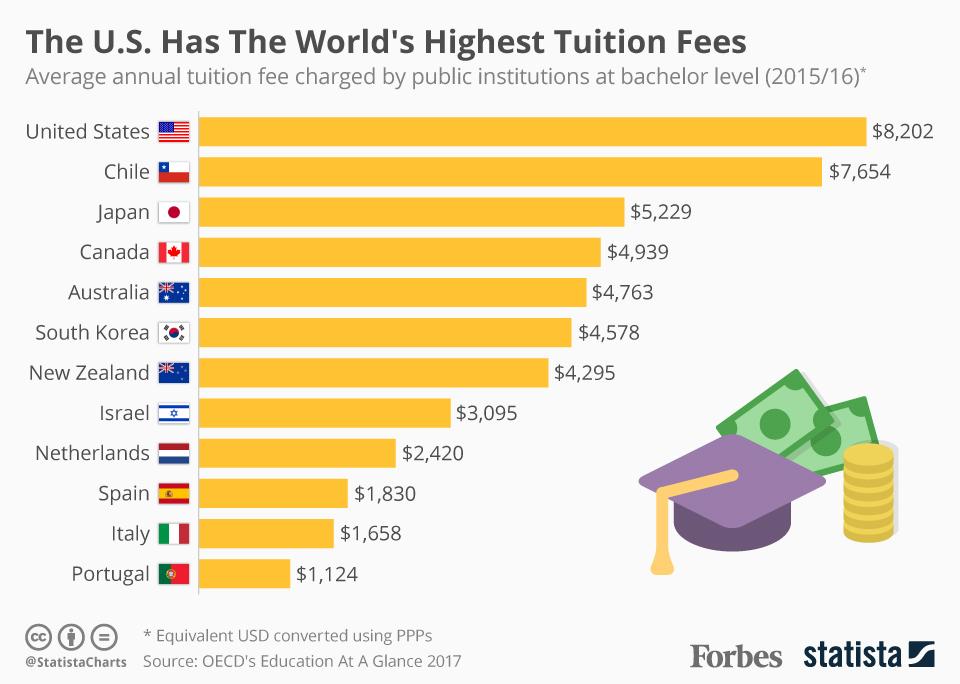
Comparison of tuition fees in European countries and the United States
Comparison of Tuition Fees in European Countries and the United States
Introduction: Evaluating the Costs of Higher Education
Choosing a university abroad requires careful financial planning. Tuition fees are often the most significant factor influencing students’ decisions. Costs vary widely across countries, institutions, and study programs. European countries and the United States are two popular destinations for international students. Each region presents unique advantages and challenges in terms of expenses, academic quality, and lifestyle. While U.S. universities are renowned for their comprehensive programs and global recognition, their tuition is often considerably higher. Conversely, many European countries offer low-cost or even tuition-free education, making them attractive for budget-conscious students.
In the United States, public and private universities operate under different funding models. Public universities receive state funding, which reduces tuition for residents but still leaves non-residents and international students with high costs. Private universities set tuition independently and often charge steep fees. Europe, however, tends to prioritize accessible education. Governments subsidize universities, reducing tuition for both domestic and international students. Some European nations also provide scholarships specifically for foreign students, further easing financial pressure.
Additional costs, including housing, food, health insurance, and transport, vary between countries and cities. Students must consider these alongside tuition to understand the total cost of education. Other factors such as language, cultural exposure, and degree recognition are equally important. European universities offer multilingual programs and cultural diversity, while U.S. universities provide strong research facilities, career services, and global networking opportunities. Considering all these elements together helps students make informed choices about studying abroad.
Tuition Fees in the United States
Public vs Private Institutions
U.S. tuition fees depend on whether a university is public or private and the student’s residency status. Public universities charge different rates for in-state and out-of-state students. In-state tuition typically ranges from $10,000 to $20,000 per year. Out-of-state and international students pay between $25,000 and $40,000 annually. Private universities charge all students similarly, with fees often exceeding $40,000 per year. Some prestigious institutions charge more than $60,000 annually.
Factors Affecting Tuition Costs
Several elements contribute to high tuition in the U.S. Universities invest heavily in research facilities, faculty resources, and campus services. Healthcare, counseling, and career development programs are often included in tuition, further raising costs. The reliance on private funding and endowments also requires universities to generate income from student fees. Despite these costs, the U.S. attracts students with its global reputation, diverse programs, and extensive extracurricular opportunities.
Financial aid, scholarships, and work-study options exist but can be competitive. Students must also plan for living expenses. Large cities like New York and San Francisco are expensive, while smaller towns offer more affordable housing and daily costs. Understanding tuition alongside other living expenses is crucial for budgeting accurately when studying in the U.S.
Tuition Fees in European Countries
Affordable and Subsidized Education
Many European countries provide low-cost or free education. Germany, Norway, and Finland charge minimal semester fees, usually between €100 and €400. France and Austria also have subsidized tuition, often below €3,000 per year. The United Kingdom and Ireland, in contrast, charge higher fees for international students, ranging from £15,000 to £30,000 annually.
Government funding and education policies largely determine tuition costs. Europe often emphasizes accessible education to promote equality and economic growth. Scholarships, grants, and exchange programs, such as Erasmus+, reduce financial burdens for foreign students. Students can benefit from tuition support and additional living allowances in some countries.
Living Costs and Regional Differences
Although tuition may be low in countries like Germany or Norway, living expenses can be high in major cities. Munich, Oslo, and Zurich have expensive housing and food costs. Eastern European nations, including Poland and Hungary, offer both affordable tuition and lower living expenses. Students can choose programs that match both budget and quality. European universities also provide diverse programs, multilingual courses, and rich cultural experiences that enhance personal growth alongside academics.
Overall Cost and Value Comparison
Studying in Europe usually involves lower tuition than in the U.S. For budget-conscious students, Europe offers significant savings. However, the U.S. provides strong academic reputation, research opportunities, and networking, which may justify higher costs. Tuition is only part of the overall investment; career prospects, lifestyle, and personal development must be considered.
Scholarships and government support differ between regions. U.S. financial aid often targets merit or need, whereas European countries provide structured grants and subsidies. Living costs can offset tuition differences, so total expenses must be evaluated. Studying in Europe offers cultural immersion and travel opportunities, while studying in the U.S. offers exposure to competitive environments and globally recognized credentials. Balancing affordability, quality, and personal goals is essential for making the best decision.
Conclusion: Making an Informed Decision
European countries and the U.S. each provide unique opportunities and costs. Europe generally offers affordable tuition, international scholarships, and diverse cultural experiences. The U.S. offers high-quality education, research facilities, and globally recognized degrees at higher costs. Students should evaluate tuition, living expenses, scholarship availability, and academic goals. Careful planning ensures that students maximize educational value while minimizing financial strain. Considering all factors allows for a well-informed decision about studying abroad, balancing cost, quality, and long-term benefits.
If you want to copy it is find by you have to mention my name and website.