
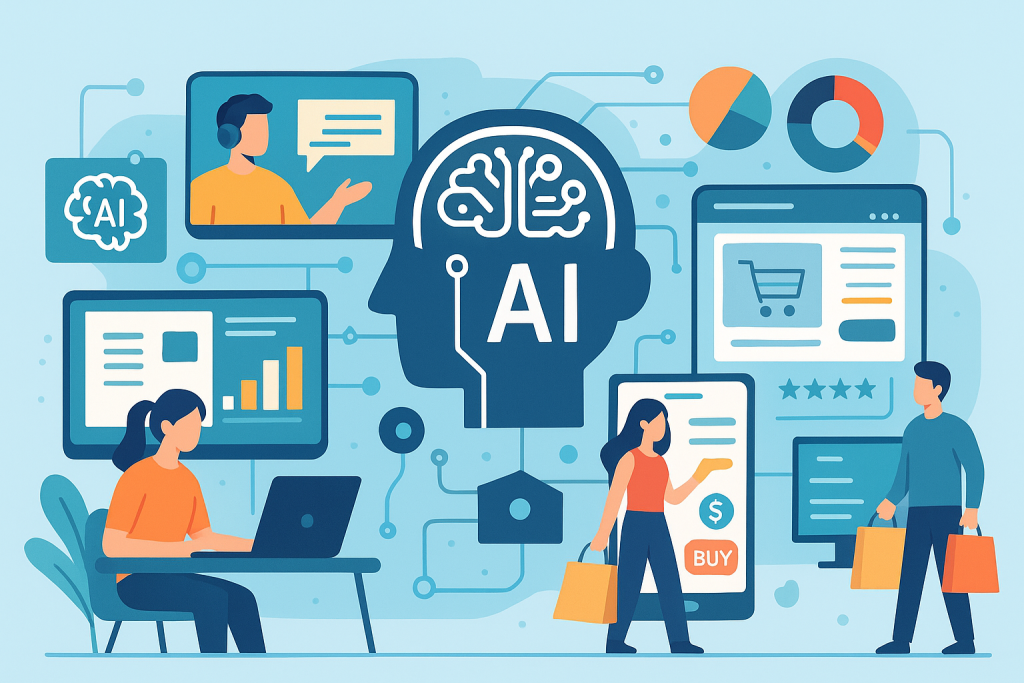
The future of artificial intelligence in education and online commerce
Introduction: The AI Revolution in Education and Commerce
Artificial Intelligence (AI) is no longer a concept reserved for science fiction. It has become a transformative force across multiple industries, especially education and online commerce. In the educational sector, AI is redefining how students learn, how educators teach, and how institutions manage resources. From personalized learning platforms to intelligent tutoring systems, AI technologies are providing unprecedented opportunities for enhancing both teaching and learning experiences. For instance, AI-driven platforms can analyze a student’s strengths and weaknesses, then customize lessons and exercises to ensure optimal comprehension and engagement.
In the realm of online commerce, AI is revolutionizing the way businesses interact with consumers. Advanced recommendation systems, predictive analytics, and chatbots are now integral components of successful e-commerce strategies. AI enables companies to anticipate customer needs, personalize product suggestions, and streamline the shopping experience. Furthermore, AI technologies help businesses optimize inventory, forecast demand, and detect fraudulent activities, making operations more efficient and secure.
The convergence of AI in education and online commerce is particularly noteworthy. Both sectors benefit from AI’s ability to process large volumes of data, generate insights, and deliver tailored experiences. As AI continues to evolve, its influence will expand, offering more innovative solutions and reshaping how individuals learn and shop. The following sections explore these developments in detail, illustrating both current applications and future possibilities.
AI in Education: Personalized Learning and Intelligent Systems
The educational landscape has been significantly reshaped by AI technologies. Traditional education models, often characterized by uniform teaching methods, are gradually being replaced by systems that cater to individual learning preferences. AI-powered platforms can analyze a student’s performance in real-time, identify areas of difficulty, and adapt content accordingly. This personalized approach helps students learn at their own pace, boosting retention and engagement.
Intelligent tutoring systems (ITS) represent another major advancement. Unlike conventional methods, ITS can simulate one-on-one tutoring experiences, offering immediate feedback, explanations, and guidance. This reduces the dependency on physical classroom settings and allows learners to access high-quality education remotely. Moreover, AI tools assist educators in curriculum planning, assessment, and administrative tasks, enabling them to focus on teaching rather than mundane operations.
Additionally, AI fosters inclusivity in education. Adaptive learning systems can accommodate diverse learning needs, including students with disabilities, language barriers, or varying skill levels. By offering personalized support, AI ensures that every learner has the opportunity to succeed. Looking ahead, the integration of AI with virtual reality (VR) and augmented reality (AR) could create immersive learning environments, making education more interactive, engaging, and effective. The possibilities for AI-enhanced education are virtually limitless, promising a future where learning is more accessible, efficient, and enjoyable.
AI in Online Commerce: Smarter Shopping Experiences
Online commerce has experienced a radical transformation thanks to AI. From personalized product recommendations to automated customer service, AI tools have elevated the shopping experience to unprecedented levels. Recommendation algorithms, for instance, analyze user behavior, preferences, and purchase history to suggest relevant products. This personalization increases customer satisfaction, encourages repeat purchases, and drives revenue growth.
Chatbots and virtual assistants are also playing a crucial role. Available 24/7, these AI-powered systems handle customer inquiries, resolve issues, and guide users through the buying process. The result is a seamless, responsive shopping experience that mimics the attentiveness of a human salesperson. Furthermore, predictive analytics help businesses anticipate demand, optimize inventory, and streamline supply chains, reducing waste and improving efficiency.
AI’s impact on marketing is equally significant. By analyzing data on customer behavior, AI tools enable targeted advertising, dynamic pricing strategies, and personalized promotions. Fraud detection systems, powered by AI, enhance security by identifying suspicious activities in real-time, protecting both businesses and consumers. As technology continues to advance, AI will further integrate with e-commerce platforms, driving innovations such as voice commerce, augmented reality try-ons, and automated fulfillment systems. The future of online commerce will be more intelligent, adaptive, and user-centric than ever before.
Conclusion: The Interconnected Future of AI in Education and Commerce
The future of AI in education and online commerce is both promising and transformative. By delivering personalized experiences, improving efficiency, and enabling data-driven decision-making, AI is reshaping how people learn and shop. In education, AI empowers students, supports teachers, and fosters inclusivity, while in commerce, it enhances customer satisfaction, optimizes operations, and drives innovation.
As AI technologies continue to evolve, the line between learning and shopping experiences may blur, creating interconnected ecosystems where knowledge acquisition and consumption coexist seamlessly. Imagine a future where educational content is personalized like product recommendations, or where e-commerce platforms learn from users in the same way tutoring systems adapt to students. These possibilities highlight the profound potential of AI to enrich human experiences across multiple domains.
Ultimately, embracing AI responsibly and ethically will be key to maximizing its benefits. By prioritizing user privacy, fairness, and transparency, businesses and educational institutions can harness AI’s capabilities while maintaining trust and accountability. The ongoing AI revolution promises a future of smarter, more adaptive, and more human-centered education and commerce, opening doors to opportunities previously unimaginable. The future of artificial intelligence in education and online commerce